Glastonbury Partners in Planting has worked with the Historical Society of Glastonbury on many
occasions. The first joint effort was a walking tour in South Glastonbury to visit historic
homes and some of our member’s gardens. Proceeds from the event supported the Society.
Since then, GPIP has partnered on many projects at the Welles-Shipman-Ward House on Main
Street in South Glastonbury, which is managed by the Society.
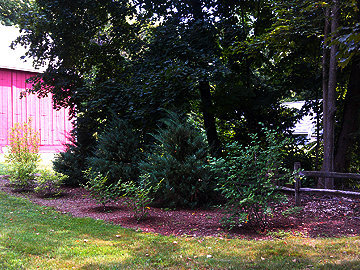
The first GPIP project, completed in 2012, created a border of trees and shrubs to screen the
neighboring property from the newly reconstructed tobacco shed. All the plantings were native
species, many of which would have been familiar to the home’s early residents. These included
witch hazel, used as an astringent; bayberry, used for making candles; and blueberry and
shadblow, used for drying and cooking.
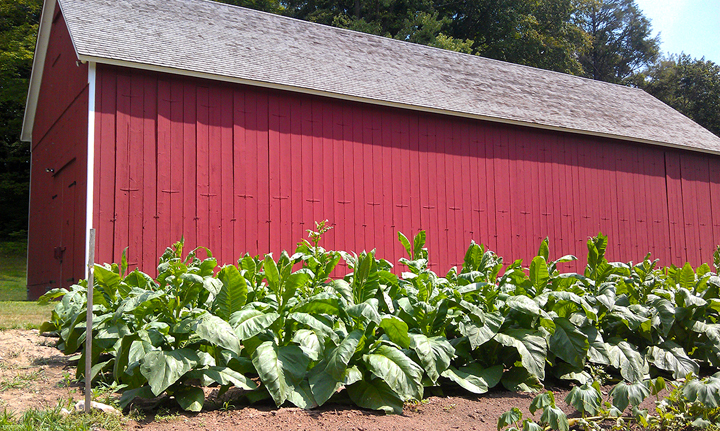
In 2013, GPIP planted a small demonstration plot of tobacco plants near the new tobacco shed.
The plants, generously donated by local tobacco farmers Ken and Howard Horton, helped
educate both children and adults about the history and process of tobacco farming. Throughout
the summer, founding members Nancy and Bob Shipman and Della and Roger Winans tended
the crop. On Farm Day in September, the plants were harvested, cut, and left in the sun to wilt
slightly so the leaves wouldn’t tear during stringing. They were then tied six to a lath and hung
to dry in the recently completed tobacco shed.
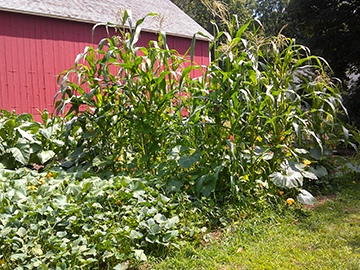
In 2015, GPIP, under the leadership of then, Project Chair Karen Rottner, the garden was
expanded to include the “Three Sisters” – corn, beans, and squash along with a variety of
heirloom vegetables and flowers for drying. The selection emphasized root crops, ideal for
winter storage such as potatoes, beets, carrots, and onions, providing a glimpse into what the
early Welles and Shipman families might have prepared for dinner. The expanded garden was
designed to engage and educate children each spring in planting, caring for the garden
throughout the summer, and harvesting in the fall.
The garden continues to be an important part of the Historical Society’s mission to help educate
visitors about Glastonbury history which includes a local history program where the
Glastonbury fifth graders visit the WSW every October as part of their education. The house,
colonial garden and grounds are part of their tour. GPIP also encourages visitors who attend
several public events including Militia Day in the Spring and Harvest Day in September to
participate in the planting and harvesting of the garden.
– Chairperson: Jennifer Sherman
Ongoing Events:
Revolutionary Colonial Faire and Muster:
Every Spring, the Ye Olde Lebanon Towne Militia sets up camp at the Welles-Shipman-Ward
House for an afternoon of live demonstrations including men at arms drilling and firing muskets
plus displays of historical weapons and militia life. The Historical Society also offers house tours,
weaving and spinning demonstrations, crafts, music, colonial games, storytelling and more at
this family-oriented event.
GPIP joins in by organizing the annual planting of the Colonial Garden with early-season
vegetables and hosting an information table featuring activities for all ages. A favorite highlight
is creating and naming the garden scarecrow with the help of children.
Harvest Time:
Each September, the Historical Society hosts this hands-on history event where visitors can
celebrate the harvest and experience life as it was for early colonists and Indigenous peoples.
Activities include house tours, Colonial and Native American games, storytelling, music, crafts,
and harvesting from the garden.
GPIP hosts an information table, answers questions about the garden, and invites guests –
especially children, to help with the harvest (many are delighted to discover that carrots and
potatoes grow underground!). Visitors can also create dried flower bouquets from blooms
grown on-site to take home.
Pay It Forward Food Drive:
GPIP partners with the Historical Society to support community members who may be
struggling with food insecurity – just as the Indigenous Peoples of this region once helped early
settlers sustain their provisions.
Held each October at the Museum on the Green, the event invites visitors to explore Native
American exhibits and hands-on artifacts, enjoy traditional music and storytelling. GPIP hosts an
information table where guests can learn about the Indigenous “Three Sisters” planting method
of corn, beans, and squash.
All food donations benefit the Glastonbury Food Pantry at the Riverfront Community Center.
 |
 |